
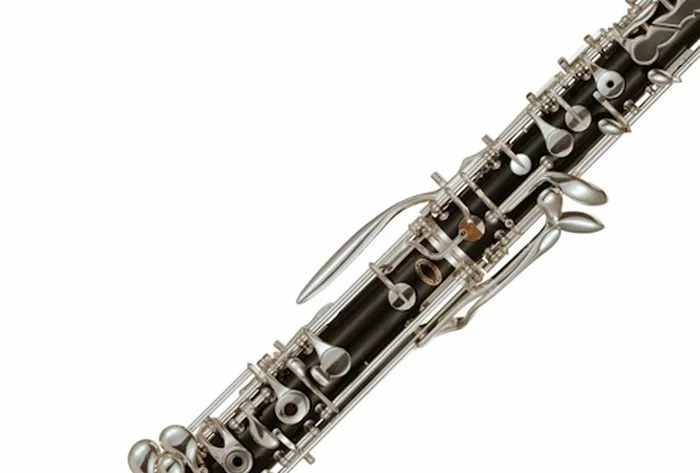
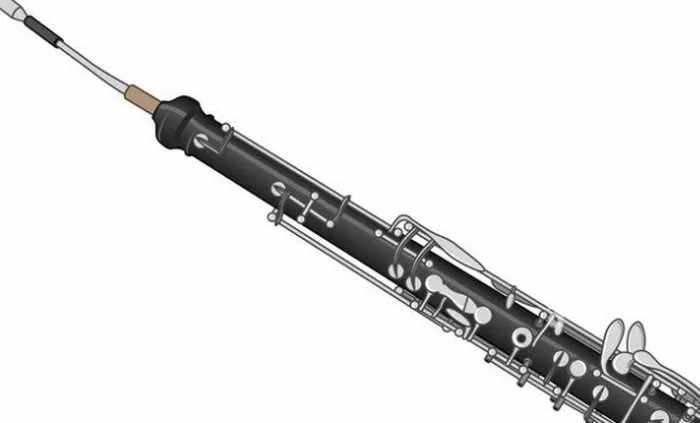
The English horn is an elegant and expressive double reed instrument that often plays a crucial supporting role in orchestral and chamber settings. Despite its name, it is neither English nor a horn. This tenor-range woodwind belongs to the oboe family, yet has distinct differences in construction, range, and most importantly—transposition.
One of the most frequently asked questions about this instrument is: what key does the English horn read in? Understanding its transpositional nature is essential not only for composers and arrangers but also for performers and conductors. In this comprehensive article, we’ll explore this question in depth, breaking down the mechanics, history, notation practices, and musical applications related to the English horn’s key.
The Transposing Nature of the English Horn
To begin with, the English horn is a transposing instrument. This means that the pitch written in its sheet music is not the same as the concert pitch it produces. Specifically, the English horn is in the key of F.
This means that when an English hornist plays a written C, the sound that emerges is actually an F below that pitch in concert terms. In other words, the English horn sounds a perfect fifth lower than written. This convention simplifies fingering for oboists who double on the English horn, as they can use similar fingerings across instruments.
What Does “In the Key of F” Actually Mean?
When we say an instrument is “in F,” we are referring to its transpositional key. For the English horn, being in F means that written music must be transposed up a perfect fifth to match concert pitch.
For example:
Written C on the English horn sounds as concert F
Written G sounds as concert C
Written A sounds as concert D
This is consistent across the range of the instrument and must be taken into account whenever music is composed or arranged for it.
Why the English Horn Transposes: Historical and Practical Roots
The origin of the English horn’s transposition lies in its historical development and ergonomic design. During the Baroque and Classical eras, transposing instruments were common, largely due to the limitations in keywork and bore design. Instrument makers built different-sized instruments for different ranges, and to allow for consistent fingering and playability, transposition was introduced.
The English horn’s larger body and lower pitch required it to be made longer than the oboe. Rather than learning a whole new set of fingerings and clefs, players could read music transposed to match familiar oboe fingerings while producing lower pitches. This tradition continues to this day, making it easier for oboists to double on the English horn.
Standard Notation Practices for English Horn
The English horn’s music is always written in treble clef, regardless of its lower pitch range. This simplifies reading and keeps the visual notation manageable. The key point is that everything written is transposed a perfect fifth above concert pitch.
Composers and arrangers must write parts with this transposition in mind. Failing to do so leads to harmonic errors and performance confusion. This is especially important in orchestration, where blending and tuning with other instruments are critical.
Concert Pitch vs. Transposed Pitch
Let’s consider an example:
If a composer wants the English horn to play concert pitch A3 (220 Hz), they would write an E4 in the part.
If the desired concert pitch is D4, the part would show an A4.
This consistent use of transposition ensures that the player performs correct fingerings while the overall sound aligns with the intended harmony.
Comparison with Other Transposing Instruments
To better understand the English horn’s position, it helps to compare it with other transposing instruments.
Clarinet in B♭: Sounds a major second lower than written.
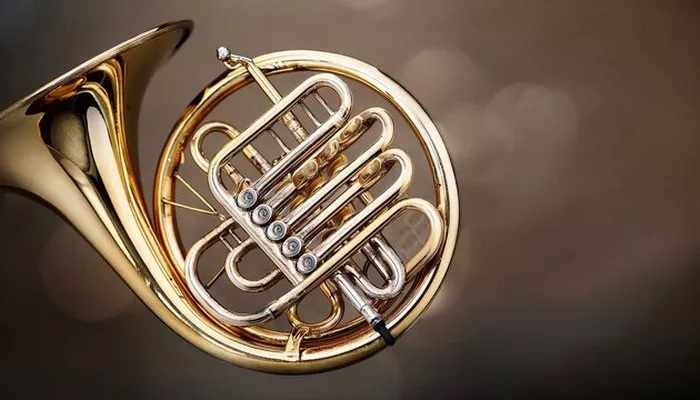
Horn in F: Also sounds a perfect fifth lower than written, like the English horn.
Trumpet in C: Non-transposing; sounds as written.
Oboe: Also non-transposing.
This comparison illustrates how common the concept of transposition is and highlights that the English horn’s F transposition is shared with the French horn.lly, the following steps must be taken:
Identify the desired concert pitch line.
Transpose the line up a perfect fifth.
Ensure the part remains in treble clef.
Check for range feasibility and musicality.
Because of its transpositional key, the English horn is especially suited for expressive, lyrical lines in the lower middle range of orchestration.
Common Mistakes to Avoid
Many novice composers mistakenly write English horn parts at concert pitch, which leads to major tuning and harmonic issues. Another frequent error is writing parts too high or too low, not considering the transposed range. The instrument’s practical range is approximately E3 to C6 in concert pitch, but composers must transpose their intended pitches up a fifth when notating.
Real-World Examples of English Horn Notation
Let’s examine some real musical excerpts.
Dvořák’s “New World Symphony” (Largo Movement): The famous English horn solo is written in the key of D major for the instrument, sounding in G major concert pitch.
Ravel’s “Boléro”: The English horn plays a notable solo line that is transposed to match the rest of the orchestra’s key structure, preserving tonal color and depth.
In each case, the transposition allows the player to use familiar fingerings while blending with other sections effectively.
Conclusion
To summarize, the English horn reads in the key of F, which means it sounds a perfect fifth lower than written. This standard simplifies fingering for oboists, ensures consistency in orchestration, and maintains the integrity of musical transposition across ensembles.
Whether you are a performer, composer, arranger, or educator, understanding this fundamental principle enhances your engagement with this beautiful instrument. The English horn’s expressive voice is deeply tied to its transposing identity—an identity that, once mastered, opens up a world of lyrical and harmonic potential.

![How to Tighten Your Embouchure on Saxophone [It’s Important!]](https://sk0.blr1.cdn.digitaloceanspaces.com/sites/758726/posts/1452431/How-to-Tighten-Your-Embouchure-on-Saxophone.jpg)


![How Many English Horns in an Orchestra? [Revealed!]](https://sk0.blr1.cdn.digitaloceanspaces.com/sites/758726/posts/1353783/How-Many-English-Horns-in-an-Orchestra.jpg)


Write a comment ...